
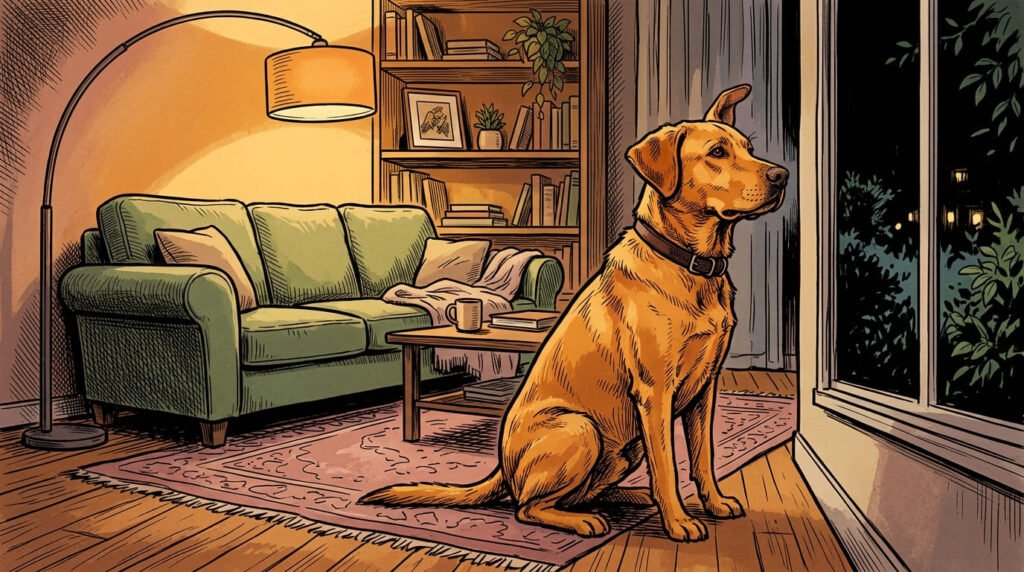
You’ve called your dog’s name. They heard you — you know they did, because their ear moved, just slightly, just enough to tell you the signal arrived. And then they looked away. Or kept doing what they were doing. Or looked at you for exactly one second before turning back toward the window.
Something in you probably thought: why is this dog being so difficult. Maybe you’ve said it out loud, half-laughing, to a partner or a friend: she’s so stubborn. He knows exactly what he’s doing.
It’s an understandable read. But what’s actually happening in your dog’s brain in that moment isn’t stubbornness, defiance, or a decision to be difficult. According to behavioral research, it’s something far more interesting — and once you understand it, that moment looks completely different.
Watch: Your Dog Is Not Being Stubborn — What’s Actually Happening in Their Brain
Why «Stubborn» Isn’t the Right Word
The word stubborn implies a choice — a deliberate decision to resist, a conscious «I know what you want and I’ve chosen not to give it to you.» Dogs don’t have the same kind of executive function that makes that specific mechanism work the way it does in a human brain.
What actually happens — and what researchers have spent decades documenting — is a set of real, measurable processes: sensory overload, conflicting motivations, stress responses, communication breakdowns, and a lesser-known phenomenon called learned irrelevance. Each looks exactly like stubbornness from the outside. None of them are.
Reason 1: Sensory Overload — A Brain That Can’t Filter Everything
The first thing to understand about why your dog isn’t listening is how differently their brain processes the world.
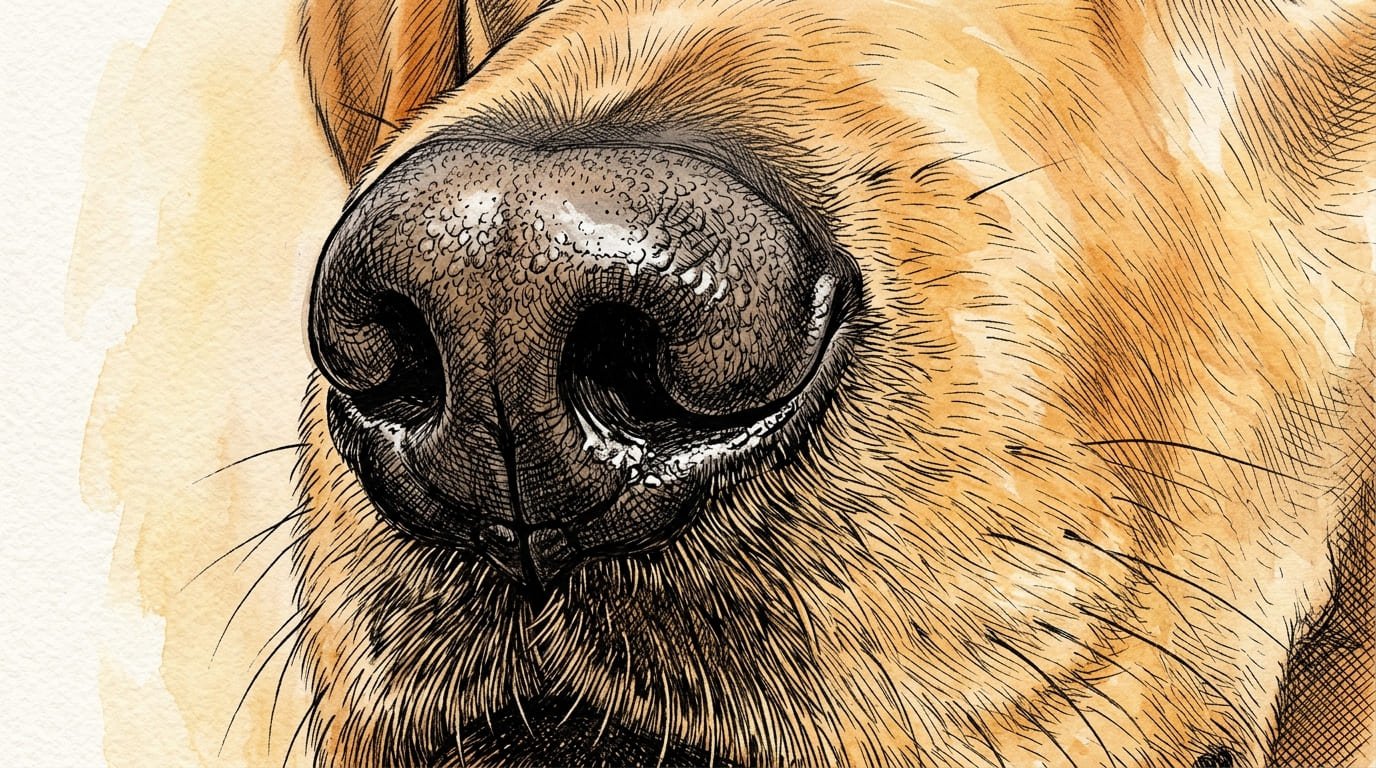
A dog’s nose contains roughly 300 million olfactory receptors, compared to about 6 million in humans — their sense of smell is estimated to be 10,000 to 100,000 times more acute. Their hearing range extends from about 40 Hz to 65,000 Hz (yours tops out around 20,000), and they can locate the source of a sound in six-hundredths of a second.
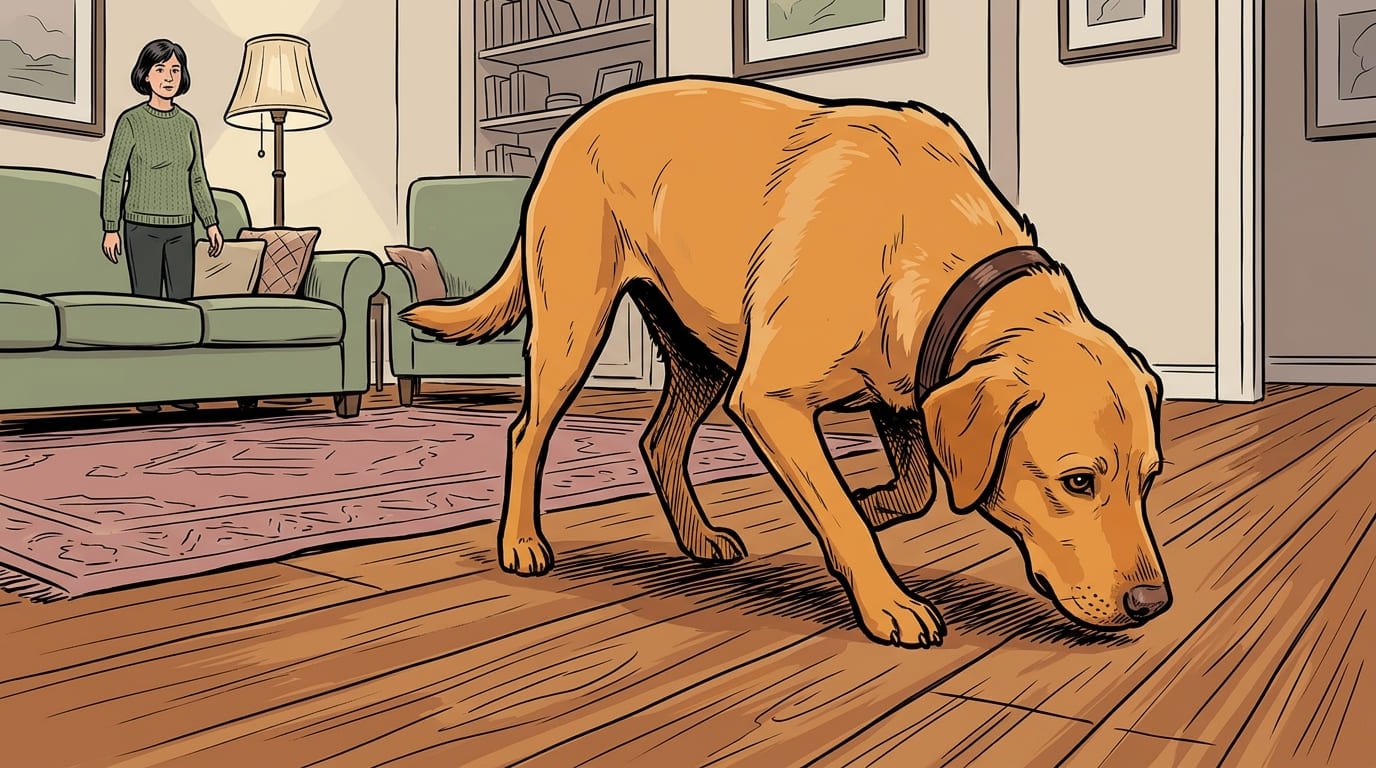
Here’s what that means for the moment you call their name: your dog isn’t in a quiet room. They’re in a room where the refrigerator’s hum is registering, where the neighbor’s dog moving two houses away just registered, and where a scent trail across the carpet is being read like an unfinished sentence.
A 2016 study published in Animal Cognition by researchers at the University of Portsmouth found that dogs in high-sensory environments — with competing auditory and olfactory stimuli — showed significantly reduced responsiveness to verbal commands, not because of disobedience, but because their cognitive resources were being prioritized toward processing incoming sensory information over the command signal.
In simpler terms: your dog’s brain was busy. Not ignoring you — busy, the way a person absorbed in a task doesn’t hear their name the first time it’s called across a room.
Reason 2: Conflicting Motivations — When Two Drives Compete
Dogs run on deep biological drives — prey drive, play drive, food drive, the exploratory drive that pulls them toward every new smell. These don’t switch off when you give a command. When a command conflicts with an active drive, what looks like defiance is actually a collision between two competing forces, and the stronger one wins in the moment.
Researchers at Stockholm University studying canine behavior found that dogs interrupted mid-chase or mid-scent-tracking showed cortisol and adrenaline levels consistent with a mild stress response — their bodies were already mobilized for one thing, and being called away registered as an interruption of a process already in motion, not as an instruction.
Think of it like being told to stop mid-sneeze. You can’t, not because you’re being stubborn, but because the process is already happening. For a dog mid-chase or mid-scent, the neurological reality is closer to that than to defiance.
Notably, research on recall reliability consistently shows the dogs most likely to come every time aren’t the most obedience-trained — they’re the ones with the strongest attachment bond to their person. The bond itself becomes a competing drive strong enough to win.
Reason 3: Stress Shutdown — When the Brain Goes Offline
This is the reason most likely to be misread as defiance when it’s actually distress.
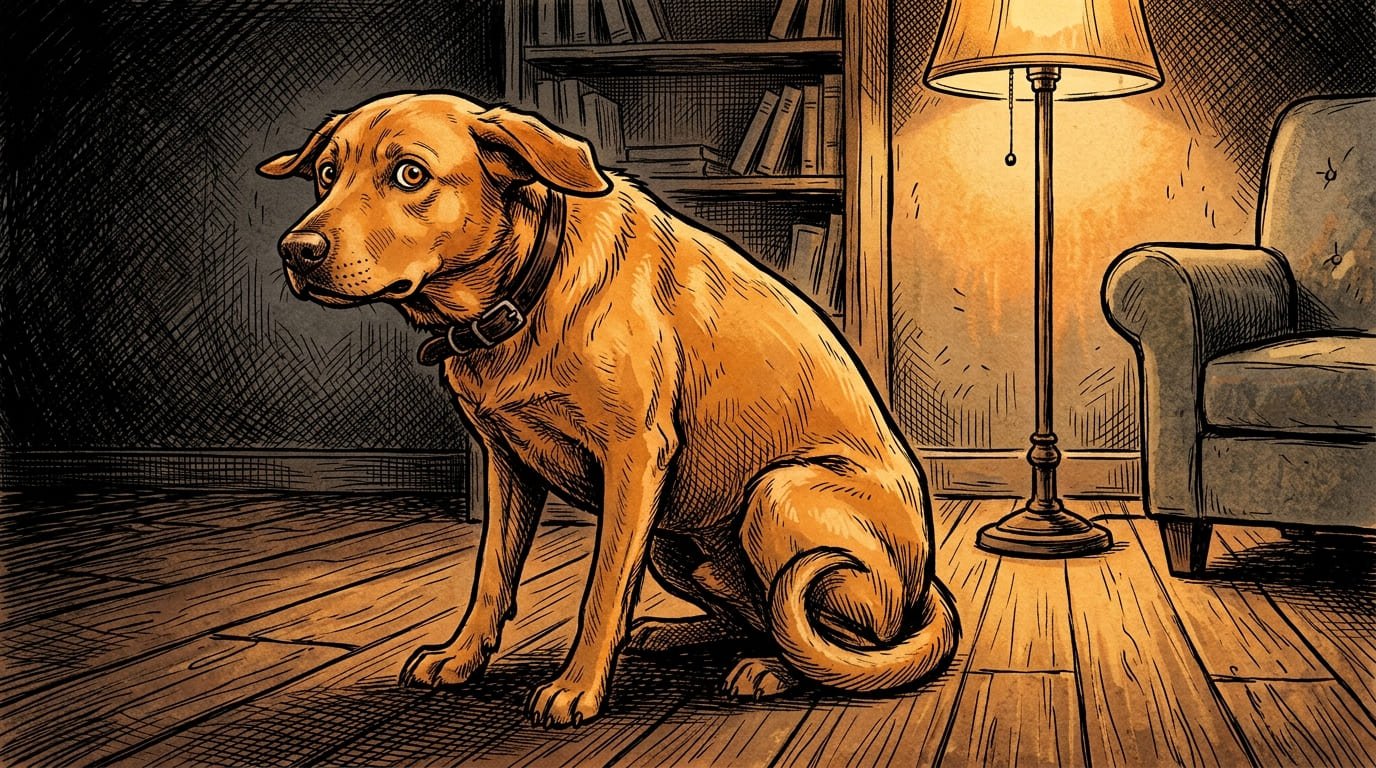
When a dog experiences a stress response — the amygdala firing, cortisol rising, the sympathetic nervous system activating — the prefrontal areas of the brain responsible for processing commands and responding to social cues go functionally offline. This isn’t metaphorical; it’s measurable.
A 2019 study in Scientific Reports from researchers at the University of Helsinki, using cortisol assays and behavioral coding, found that dogs with elevated stress markers showed significantly impaired responsiveness to commands — not from refusal, but because the neurological pathways needed to process and execute them were suppressed by the stress response itself.
A dog that’s been yelled at, or is in an unfamiliar, frightening environment, isn’t choosing not to listen. Their brain has been placed in a state where listening to that kind of signal is physiologically harder. Worse, repeated cycles of command → stress → inability to comply → escalating command → more stress can condition the command itself into a stressor, so the dog avoids responding not from defiance but because that sound has been paired with an experience that triggers their stress response.
Reason 4: Learned Irrelevance — When Your Word Loses Its Meaning
This is the one most owners don’t realize they’ve contributed to.
In behavioral science, learned irrelevance describes what happens when a stimulus — a word, a sound — is presented so often without a meaningful consequence that the brain learns to filter it out as background noise. If you say your dog’s name repeatedly with no clear, predictable outcome, researchers at the University of California studying habituation in dogs found that the neural pathway responding to that cue weakens progressively over time — a reduction that can take weeks of deliberate counter-conditioning to reverse.
In plain terms: repeating your dog’s name when they don’t respond may unintentionally train them to treat their own name as something that doesn’t require action. It’s not the dog’s fault — it’s a predictable result of how associative learning works. The fix isn’t a new name; it’s rebuilding the association, so the name reliably predicts something good (attention, play, a treat) every time it’s used.
Reason 5: Communication Mismatch — The Language Your Dog Actually Speaks
Dogs are remarkably good at reading humans — research shows they outperform every other non-human species, including chimpanzees, at following human communicative gestures. A study published in Science by researchers at Harvard and the Max Planck Institute found dogs evolved a specific facial muscle, the levator anguli oculi medialis, that lets them raise their inner brows in an expression humans read as appeal or distress — a muscle wolves don’t have, developed specifically through co-evolution with humans.
But the relationship is asymmetric: dogs evolved to read us, while we haven’t evolved equivalent tools to read them — we have to learn their language deliberately. What can look like ignoring a command is often a dog responding to something else entirely: your posture, your tone, the tension in your body, the speed of your approach. When your voice says «come» and your body says something tense or frustrated, your dog responds to the body. Every time.
What This Means
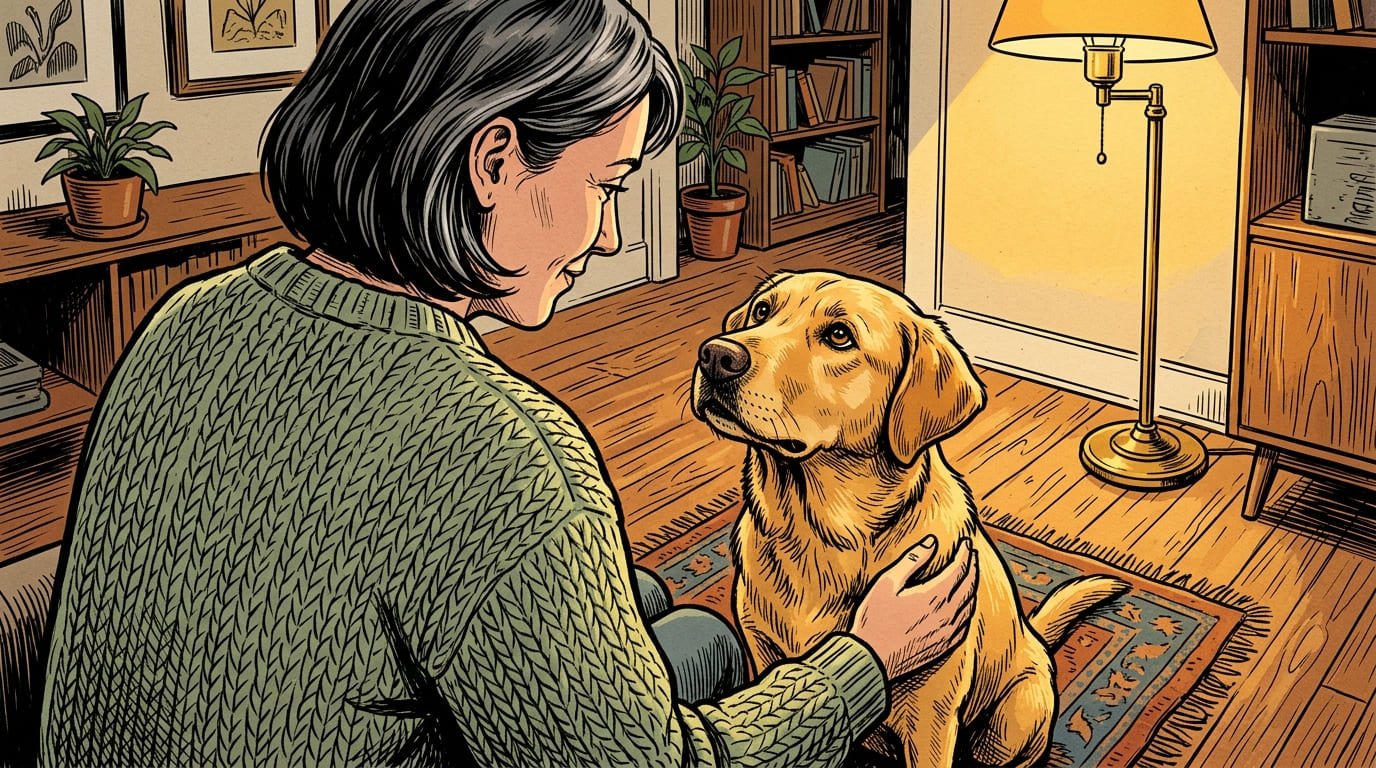
Every moment that looked like your dog being difficult was actually a brain managing sensory overload, resolving competing drives, navigating a stress response, waiting for a signal that had lost its meaning, or responding to something you communicated without realizing it. None of it was about defiance. All of it was a form of communication.
The dog that doesn’t come every time isn’t a bad dog — they’re doing their best with the signals they have, the brain they have, and the bond they’ve been given. Understanding the difference between these five patterns changes not just how you interpret those moments, but how you respond to them.
Want the complete science of what your dog feels about you? Get The Bond Guide — free, 5 chapters, 30 seconds to download.